


Screen-Free Activities for Kids: Beyond the Screen, Into Imagination
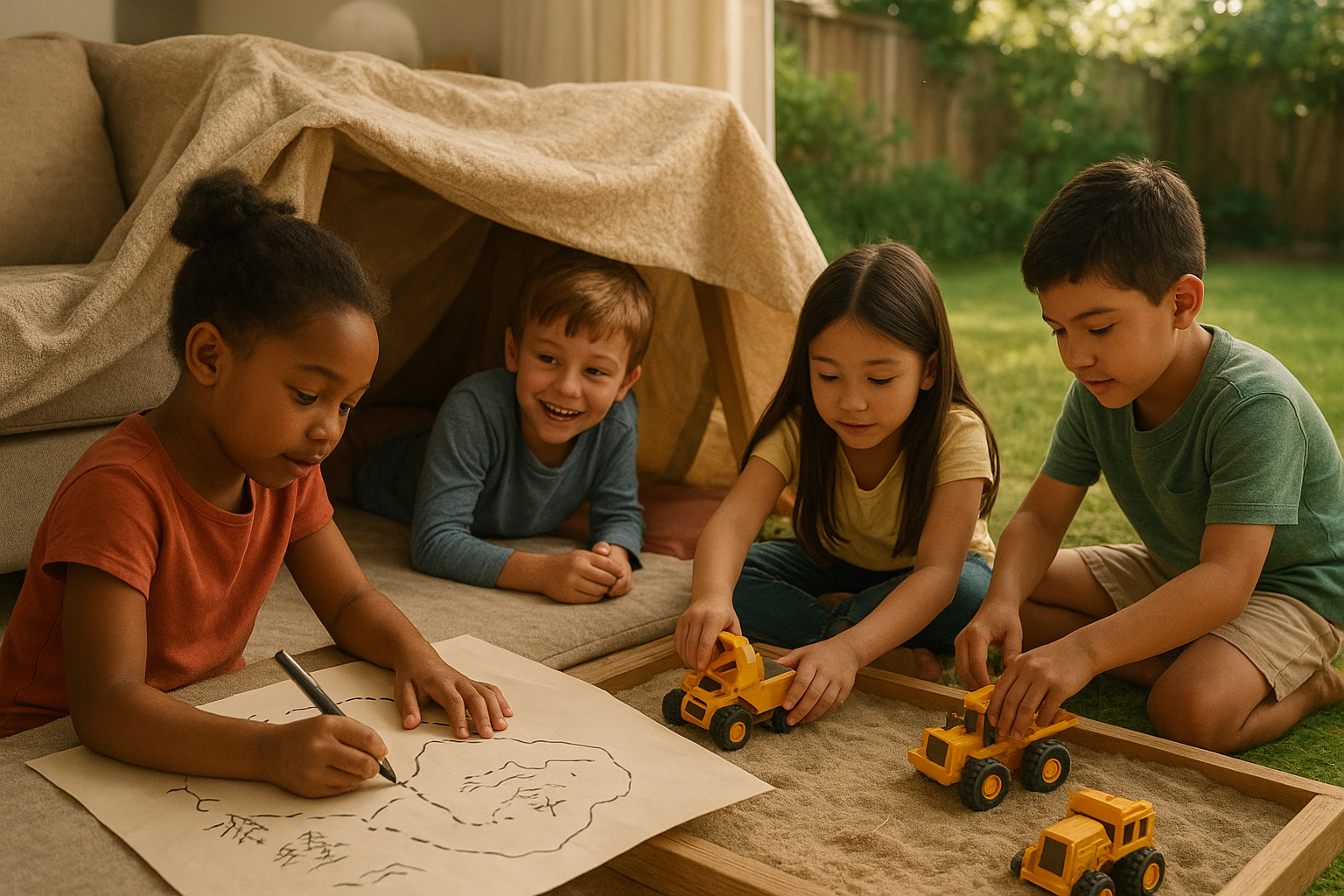
If you’re trying to reduce the default “I’m bored” → “hand me the tablet” loop, you don’t need a perfect, screen-free household.
You need a repeatable menu of activities that (1) matches your kid’s personality and (2) makes imagination the main event.
The American Academy of Pediatrics makes a similar point from the other side: instead of chasing one universal limit for every kid, it recommends focusing on the quality of media use and building household rules that protect what matters—sleep, movement, and family connection (see the AAP’s guidance in its screen time guidelines).
So let’s make this practical.
This guide gives you:
-
A quick “kid profile” so you’re not guessing
-
A set of screen-free activities for kids that reliably trigger pretend play, building, and storytelling
-
A simple framework for choosing toys and materials that actually get used
Pro Tip: If screens are the default in your house, start by “crowding in” something better—an activity bin on the kitchen counter or a 10-minute outside routine—before you try to “cut” anything.
Step 1: Pick your kid profile (so activities stick)
Kids don’t get hooked on activities because they’re “educational.” They get hooked because the activity matches how they like to play.
Choose the closest fit (you can pick two):
The Builder
-
Loves: putting things together, testing what holds, rebuilding
-
Works best with: blocks, cardboard, tape, simple tools, “missions”
The Storyteller
-
Loves: characters, role-play, inventing worlds
-
Works best with: costumes, figurines, puppets, prompts
The Maker
-
Loves: crafts, designing, tinkering
-
Works best with: art supplies, recycled materials, kits with flexibility
The Mover
-
Loves: physical challenges, races, obstacle courses
-
Works best with: outdoor games, timed challenges, scavenger hunts
The Nature Explorer
-
Loves: collecting, observing, “discovering”
-
Works best with: walks, bug hunts, magnifiers, journals
The Sensory Seeker
-
Loves: digging, pouring, mixing, sorting
-
Works best with: bins (rice/water/sand), play dough, measuring tools
Once you have a profile, you can stop scrolling 100-idea lists and start choosing the 5–10 ideas that match your kid.
Screen-free activities for kids: 6 types that spark imagination
Imagination shows up when kids have three things:
-
materials they can use more than one way,
-
time to get into it, and
-
a “story reason” (even a tiny one).
Below are six categories you can rotate week to week.
1) Build-and-rebuild challenges (best for “Builders”)
These are the easiest wins because the “activity” is simply a problem to solve.
Try:
-
Blanket-fort architecture: “Build a fort that can fit 3 stuffed animals and doesn’t collapse when you crawl in.”
-
Cardboard engineering: turn a box into a spaceship dashboard, store, or pet clinic.
-
Bridge challenge: make a bridge with blocks/books that can hold a toy car.
Why it works: open-ended building encourages kids to create, test, and iterate—skills linked to high-quality play and thinking behaviors.
2) Pretend play with simple prompts (best for “Storytellers”)
Pretend play doesn’t require a giant playroom. It needs a spark.
Try:
-
Restaurant night: kid makes a menu; you “order”; they “deliver.”
-
Mini rescue mission: “A baby dinosaur is stuck in the living-room canyon—how will you save it?”
-
Town-in-a-box: use tape roads + figurines + blocks.
If you want the evidence-based “why,” Child Mind Institute breaks down the developmental role of pretend play in its article on the power of pretend play.
3) Creative making (best for “Makers”)
The secret here is constraints. Unlimited supplies can actually freeze kids.
Try:
-
Recycled-maker bin: paper towel tubes, tape, string, stickers, cardboard, glue.
-
Map-making: draw a treasure map of the backyard or living room.
-
DIY book: fold paper, staple, and create a story together.
Keep it manageable: put down an old sheet or do “table-only” crafting if mess is a stress trigger.
4) Sensory play that turns into a story (best for “Sensory Seekers”)
Sensory bins aren’t just for toddlers—school-age kids will stay with them longer when there’s a mission.
Try:
-
Archaeology dig: hide small objects in rice/kinetic sand and give them a spoon + brush.
-
Potion lab (outdoors if possible): water + cups + safe natural items.
-
Mini construction site: sandbox + vehicles + “deliver this pile here” tasks.
⚠️ Warning: If you have younger siblings around, keep small pieces out. And water play always needs supervision—slips happen fast.
5) Outdoor “quest” play (best for “Movers” + “Nature Explorers”)
Outside is imagination fuel because the world is bigger than the living room.
Try:
-
Nature scavenger hunt: “Find something smooth, something spiky, something that smells good.”
-
Backyard obstacle course: “Can you cross the lava without touching the grass?”
-
Sidewalk chalk city: draw roads, buildings, a zoo, a rocket launchpad.
If you need a family-friendly planning tool for balancing media with offline life, the AAP’s Family Media Plan can help you set screen-free times and places that actually match your routine.
6) Games that make kids invent rules (best for “Builders” + “Storytellers”)
Rule-making is creative thinking in disguise.
Try:
-
Invent-a-board-game: paper board, dice, tokens, and a theme (space race, jungle rescue).
-
I-spy box: hide objects in rice; kids design clue cards.
-
Story dice: write characters/places/problems on slips; draw three and build a story.
Step 3: The toy/material checklist (what to buy when you want imagination, not noise)
A lot of toys look exciting… and then sit untouched after two days.
A better approach is to buy (or set aside) open-ended toys—materials that don’t force one “right” outcome.
The National Association for the Education of Young Children summarizes research on how different toys shape play quality, noting that simple, open-ended toys often score highly (see NAEYC on how specific toys affect play quality).
Here’s a parent-friendly checklist you can use before buying anything:
The Open-Ended Toy Checklist
A toy that’s likely to spark imagination checks at least 4 of these 6:
-
Multiple uses
-
Can it be a vehicle and a tool and a character prop?
-
-
Expandable
-
Does it play well with what you already own (blocks, figurines, cardboard, outdoor stuff)?
-
-
Kid-led
-
Does your child have to decide what happens next (instead of pressing buttons)?
-
-
Durable enough for real play
-
If it’s fragile, kids will either break it or avoid it.
-
-
A clear “first 60 seconds”
-
Can your kid do something satisfying immediately, without you setting up a whole scene?
-
-
Room for skill growth
-
Will it still be fun in 6 months, or is it a one-trick thing?
-
If you’re buying gifts for ages 5–12, this checklist is often more useful than “top toy” lists because it matches how kids actually play.
Step 4: Red flags—why some screen-free ideas fail (and what to do instead)
If screen-free plans keep falling apart, it’s usually not because your kid “doesn’t like imagination.” It’s because the setup is fighting reality.
Red flag 1: The activity needs you the whole time
Fix: choose activities where you’re the starter, not the engine.
-
Start: “You’re in charge of building the fort.”
-
Then: step back and become the “customer” or “inspector.”
Red flag 2: The instructions are too specific
Fix: switch from “craft project” to “making materials.”
-
Instead of “make this exact paper airplane,” try “build something that can carry a cotton ball.”
Red flag 3: The activity doesn’t match the kid profile
Fix: keep two bins ready:
-
one for builders (tape, cardboard, blocks)
-
one for storytellers (figurines, costumes)
Red flag 4: There’s no ‘story reason’
Fix: add one sentence:
-
“You’re designing a rescue vehicle.”
-
“You’re building a base for your explorers.”
Step 5: Choosing a “big” hands-on toy: what to look for (and when it’s worth it)
Some kids will happily build with cardboard forever. Others crave a toy that feels real—something with moving parts, weight, and control.
If you’re considering a larger hands-on toy (especially for gifting), compare options using these criteria:
Criteria that matter (more than flashy marketing)
-
Control complexity
-
Is it simple enough to enjoy in the first hour, but deep enough to master?
-
Build quality + materials
-
Look for durable materials and clear replacement/return policies.
-
Where it can be used
-
Indoors vs outdoors, noise level, and whether it works on carpet/grass/sand.
-
Battery reality
-
How long does it play per charge, and is charging simple?
-
Parts and pinch points
-
Moving parts are fun—but you’ll want clear safety guidance and age recommendations.
A fit-based example: RC construction toys
RC construction toys can be a strong option for “Builders” and “Sensory Seekers” because they combine:
-
pretend play (“I’m running a job site”)
-
problem solving (“How do I move this pile?”)
-
fine-motor control (coordinating tracks + arm movement)
If that’s your kid, one option to look at is the TOBOUY RC Excavator, which is described as a 1/20-scale, 11-channel remote-control excavator made with alloy and ABS materials, with a rechargeable battery and stated playtime of 25–40 minutes per charge.
For parents who like to dig into “what does this actually do?” before buying, TOBOUY also publishes an RC excavator guide and a 360° vs standard RC excavator comparison to help you evaluate fit.
Step 6: A simple 7-day screen-free plan (so you don’t have to think every day)
The hardest part of screen-free routines is decision fatigue. So here’s a plan you can repeat.
Day 1: The Fort + Story
-
Build a fort.
-
Add one prompt: “Tonight the fort is a research station.”
Day 2: The Map
-
Draw a treasure map.
-
Hide a “treasure” and write 3 clues.
Day 3: The Build Challenge
-
“Build something that can cross a gap.”
Day 4: Sensory Mission
-
“Archaeology dig” or “construction site.”
Day 5: Outdoor Quest
-
Scavenger hunt + chalk city.
Day 6: Invent-a-Game
-
Kids design the rules; you play one round.
Day 7: The Big Project
-
Combine categories: build + story + outdoors.
-
Example: “Design a zoo with habitats and paths.”
Key Takeaway: The win isn’t “no screens.” The win is a routine where imagination has a place to land.
Next steps: make it easier on yourself
If you want this to work long-term, do two things:
-
Build a default routine (even 20 minutes counts)
-
after school: snack → outside → free play
-
weekend: one “big project” block
-
Make the good choices visible
-
a builder bin
-
a storyteller bin
-
a small outdoor kit by the door
And if you’re looking for one sturdy, hands-on gift option that leans into building play, you can browse TOBOUY and compare what fits your space, budget, and your kid’s play style.
